The Life of Dian Wei — The Man Who Remained Cao Cao's Shield
From Romance of the Three Kingdoms and the Biography of Dian Wei in the official history Records of the Three Kingdoms
On the night of Wancheng, the gate of Cao Cao's camp was blocked by a single man. His weapons had been taken, and his body was weakened by wine. Even so, the enemy could not pass through that gate. That man's name was Dian Wei.
Read the Comic
Cao Cao's Shield
The Man Who Was Found
The Battle of Puyang
The Trap at Wancheng
The Night He Blocked the Gate
Differences from the Official History
Conclusion
Read the Text
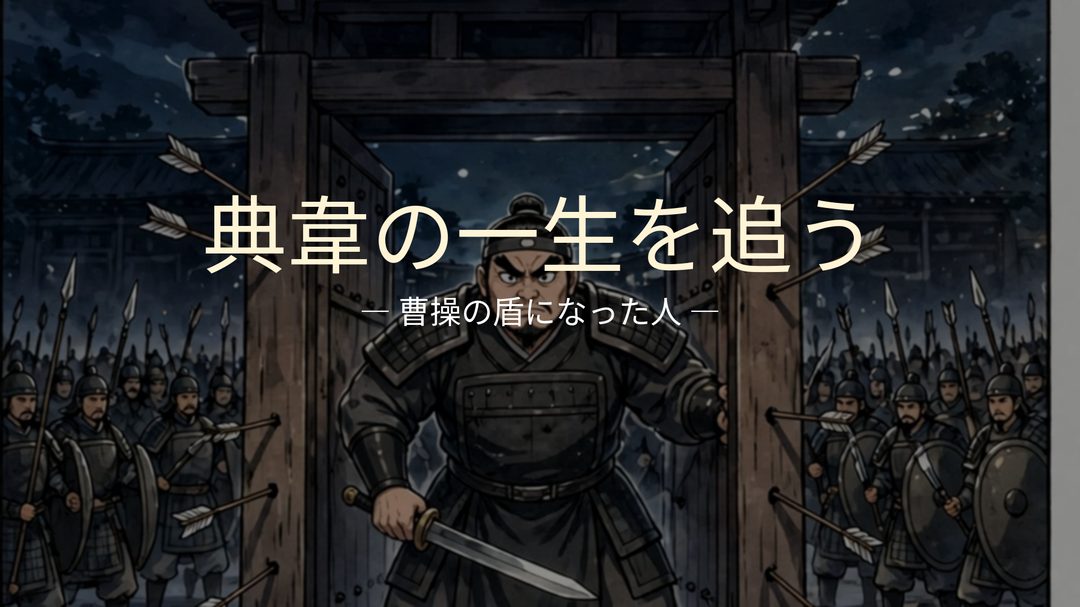
Cao Cao's Shield
On the night of Wancheng, the gate of Cao Cao's camp was blocked by a single man. His weapons had been taken, and his body was weakened by wine. Even so, the enemy could not pass through that gate. His name was Dian Wei. He was a wielder of twin halberds, whom Cao Cao called "Elai of old." Dian Wei kept protecting his lord like a shield, and at the end fell before a gate as well.
This time, we will follow the text of the Romance and trace Dian Wei's life.
The Man Who Was Found
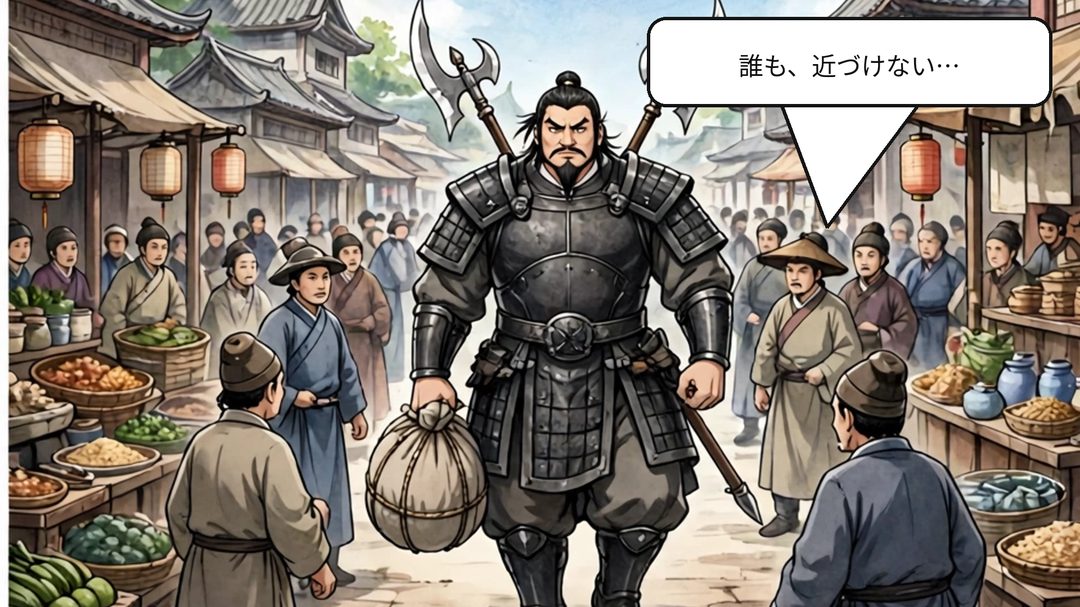
Dian Wei is said to have been born in Ji Wu of Chenliu. The young Dian Wei was a man known for his strength of arm and his chivalry. Dian Wei, who had avenged a wrong for a friend, is said to have carried the head and walked straight out through the middle of the market. Though those who pursued him numbered in the hundreds, not a single one could approach Dian Wei, the text relates.
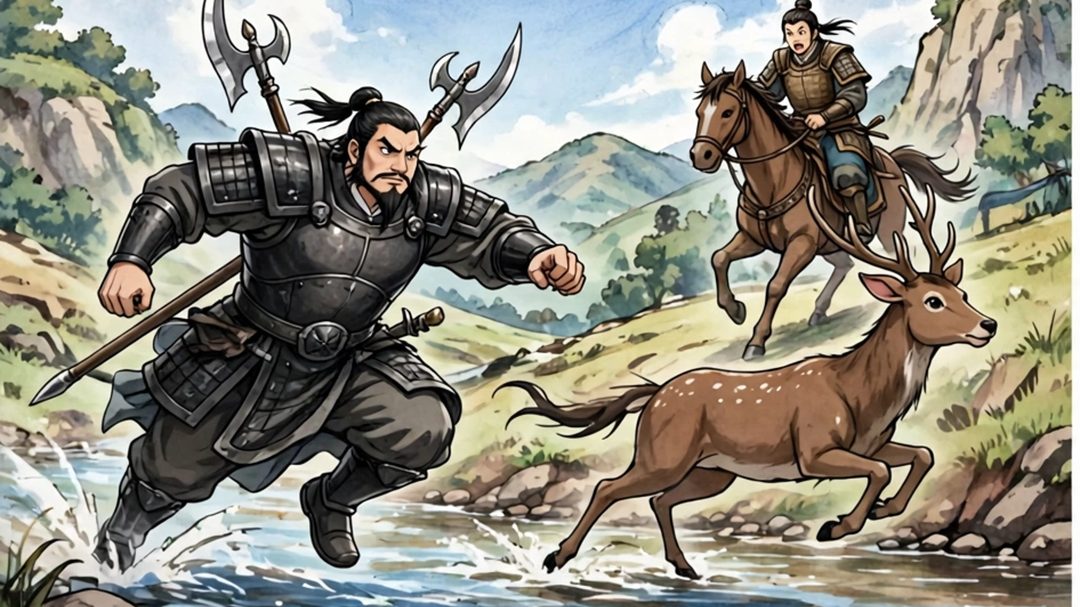
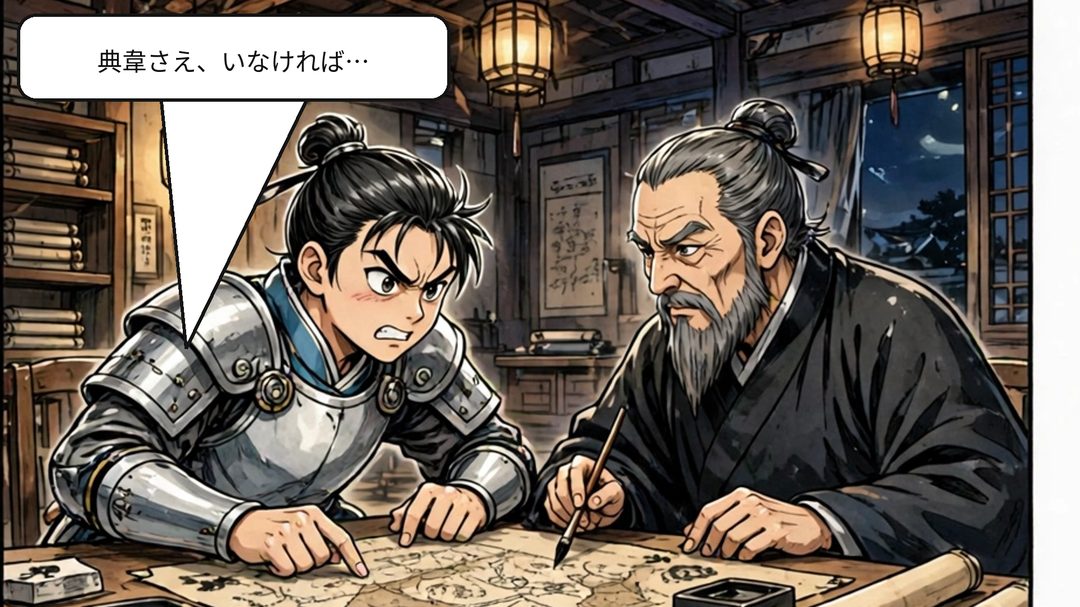
Dian Wei was at first in Zhang Miao's army, but he did not get along with the men under the tent, cut down several dozen men with his own hands, and fled into the mountains. The one who found that Dian Wei was Xiahou Dun. While hunting, his eye stopped on the figure of the huge man chasing a deer and crossing a valley stream. Xiahou Dun welcomed Dian Wei into the army and recommended him to Cao Cao.
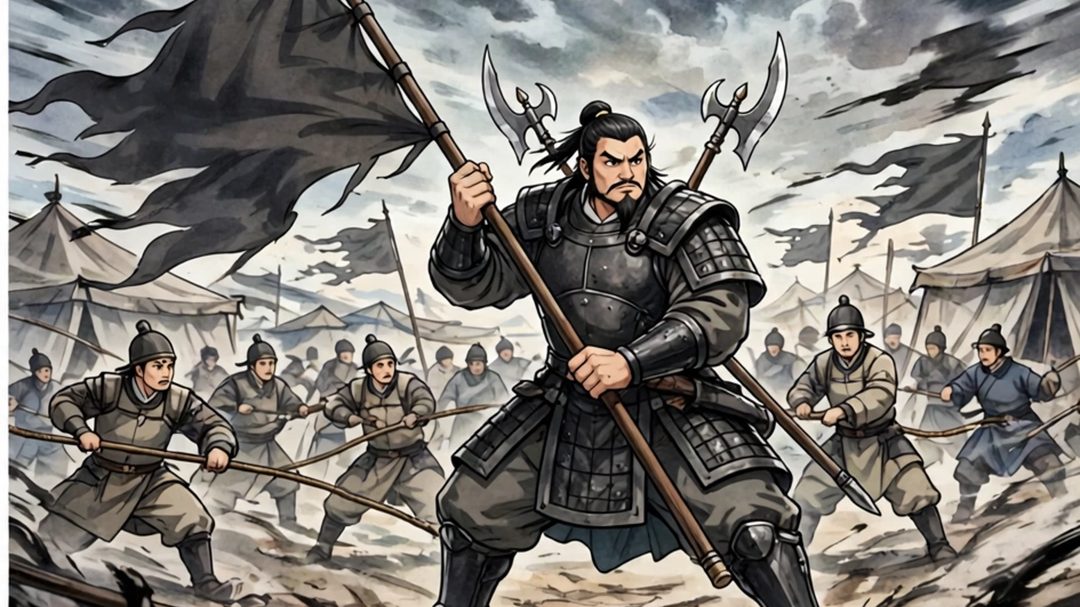
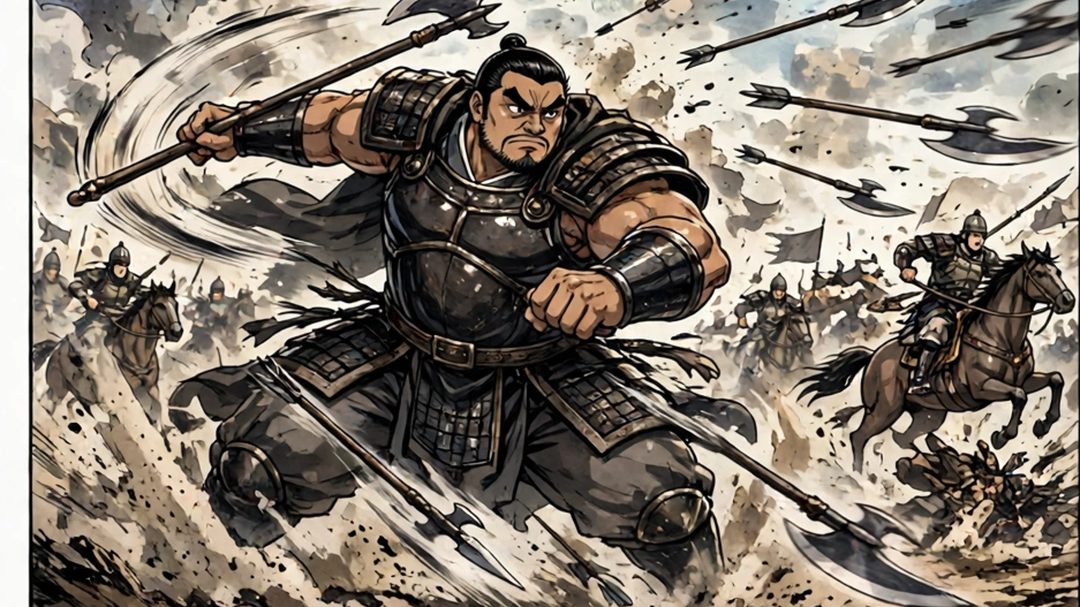
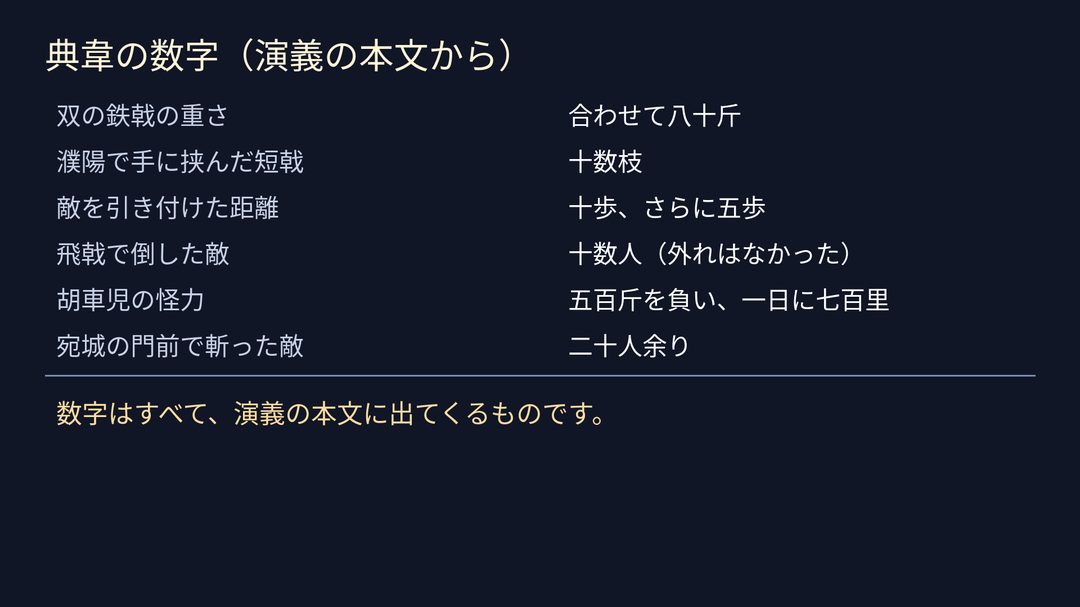
Before Cao Cao, Dian Wei demonstrated riding a horse with halberds in hand. The twin halberds he used are said to have weighed eighty jin combined. At that moment, the great banner of the camp was battered by a strong wind and seemed about to fall. Though many soldiers supported it, the banner would not settle. Dian Wei dismounted, made the soldiers step back, and alone gripped the banner's pole and stood in the wind, without moving in the slightest, it is said.
Seeing that, Cao Cao said:
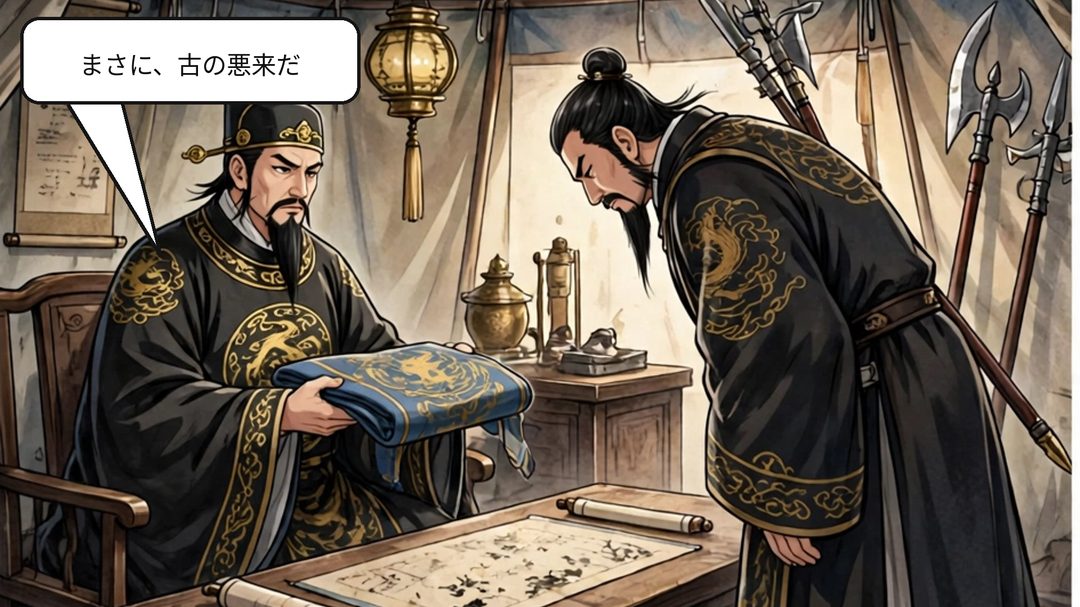
Cao CaoThis is Elai of old.
Elai is the name of a man of great strength who served a king of Yin long ago. On the spot, Cao Cao appointed Dian Wei as Commandant Before the Tent, and bestowed on him his own brocade garment and the saddle of a fine horse. Thus Dian Wei became the man who guards right beside Cao Cao.
The Battle of Puyang
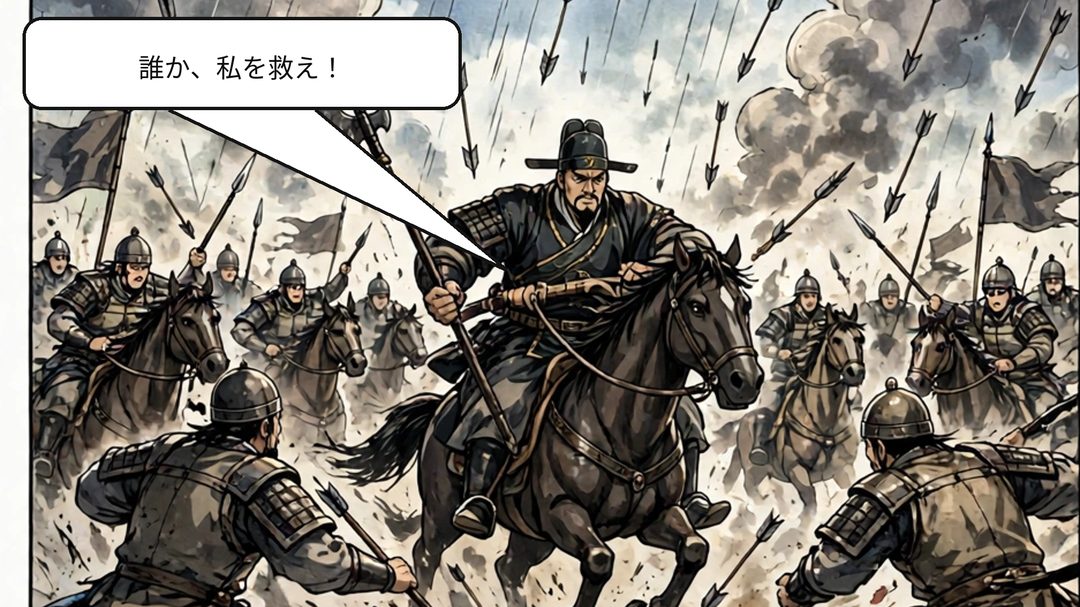
The story is of the year 194. At Puyang, Cao Cao was fighting Lü Bu. On the way back from a night raid on Lü Bu's separate stockade, Cao Cao's army was surrounded on all four sides. With the sound of clappers, arrows poured down like rain. Cao Cao could not advance, and lost his path of escape. When Cao Cao cried out for someone to save him, the one who leapt out from among the cavalry was Dian Wei.
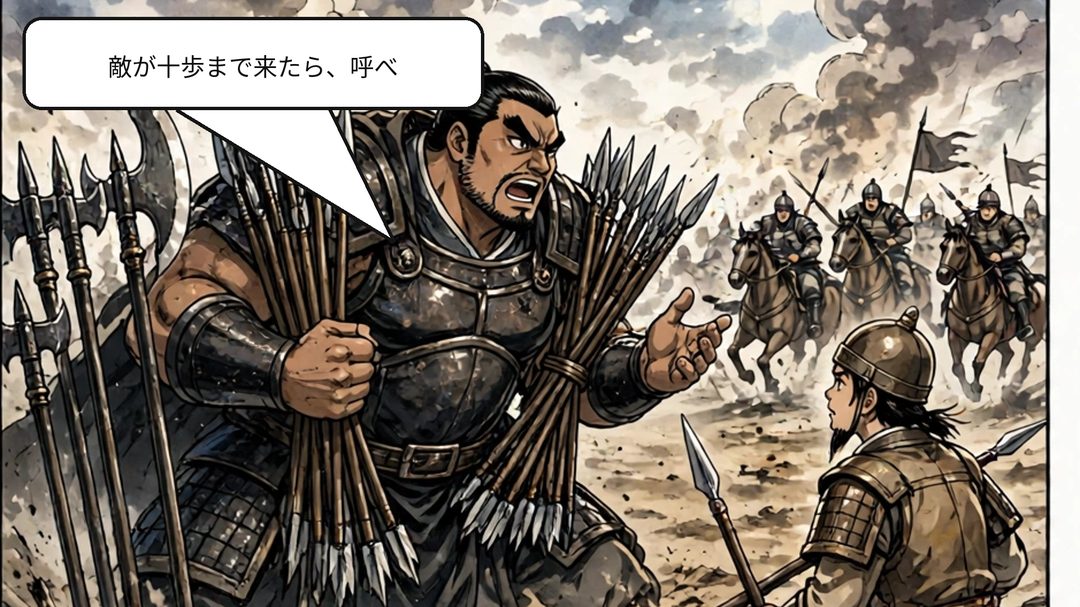
Dian Wei leapt down from his horse, stuck his twin halberds into the ground, and held a dozen or so short halberds tucked in his hands. And he ordered the man beside him: when the enemy comes within ten paces, call out. The enemy cavalry pressed in, and the man beside him cried: ten paces. Dian Wei answered:
Dian WeiCall out when they are within five paces.
The enemy was already right before his eyes. When the man beside him cried out, Dian Wei hurled the short halberds one after another. With each halberd, one man fell from his horse, and there was not a single miss, it is related. In no time, a dozen or so men had fallen. Lü Bu's army broke, and Dian Wei leapt back onto his horse and cut into the enemy, swinging his twin halberds.
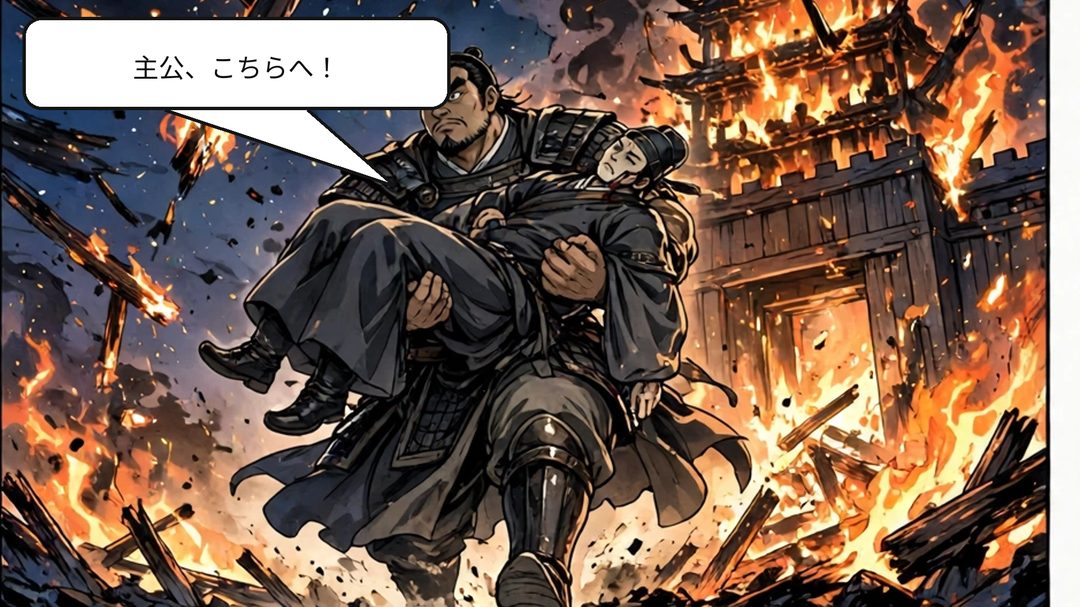
The four generals including Hao Meng could not match Dian Wei, and each fled away. Dian Wei cut open the encirclement and rescued Cao Cao. Even after this battle, Dian Wei rescued Cao Cao from within fire. In the city of Puyang, caught in a trap and wrapped in flames, Dian Wei went back and forth through the city amid smoke and fire, searching for his lord's figure.
Cao Cao, struck by a falling burning beam and knocked down, was rescued by Dian Wei together with Xiahou Yuan, and they broke through the fire out of the city. After his deeds at Puyang, Dian Wei was promoted to Commandant Leading the Army, and became the center of those guarding Cao Cao's tent.
The Trap at Wancheng
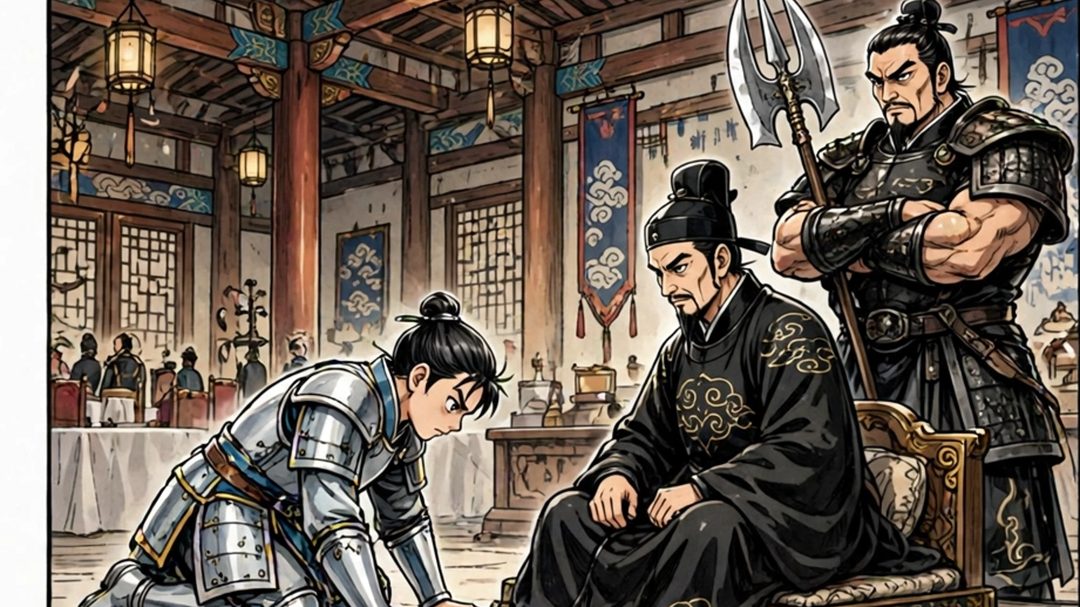
It was Jian'an 2, the year 197. Cao Cao advanced south and brought Zhang Xiu of Wancheng to surrender. Zhang Xiu surrendered the city, and Cao Cao entered Wancheng. Dian Wei guarded beside Cao Cao, as always. But Cao Cao's conduct earned Zhang Xiu's resentment.
Cao Cao had taken the widow of Zhang Xiu's uncle to his side. Zhang Xiu grew angry, and devised a plan for a night attack with his strategist Jia Xu. But even attacking head-on, Dian Wei stood at the gate. The Zhang Xiu party thought first of removing Dian Wei. The one marked was Hu Che'er, an officer under Zhang Xiu.
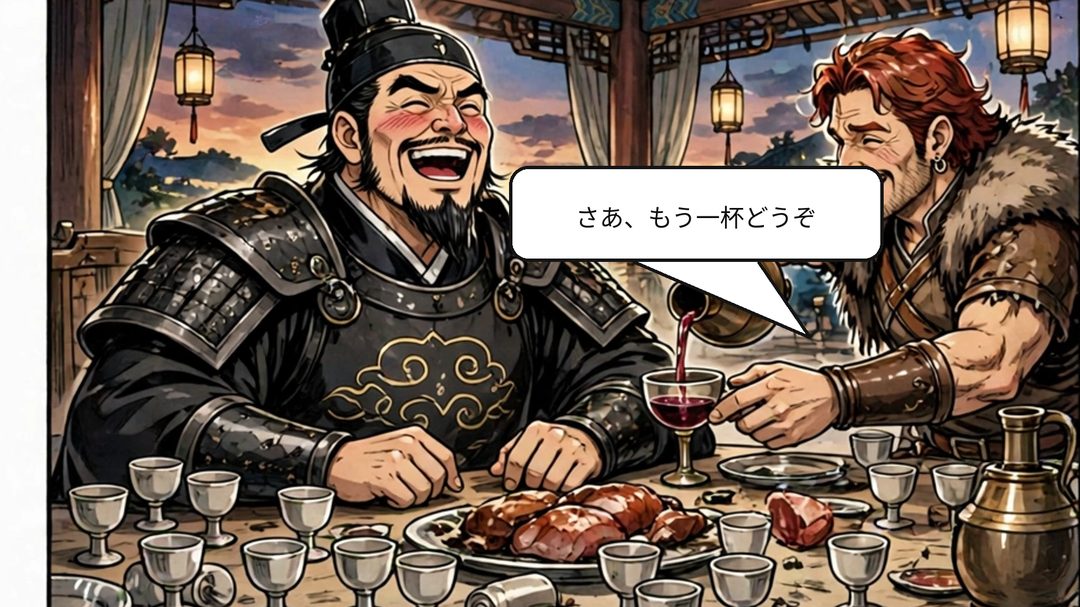
He was a man described as a prodigy, who bore a load of five hundred jin and traveled seven hundred li in a day. The plan was this. Invite Dian Wei to a drinking seat, make him deeply drunk, and in that opening, steal away his trusty twin halberds. Dian Wei was a man who loved wine. At the seat to which he had been invited in Jia Xu's name, Dian Wei was treated with great courtesy, and returned deeply drunk by evening.
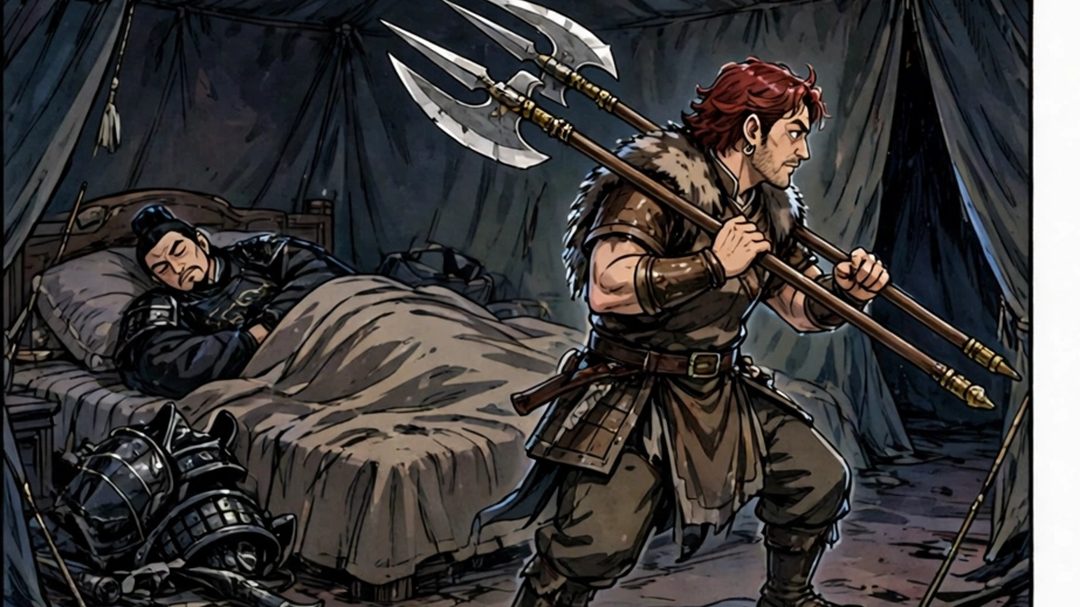
Into the procession escorting the returning Dian Wei, Hu Che'er slipped in. He crept into the tent room just as he was, and stole away Dian Wei's twin iron halberds. Unaware of it, Dian Wei lay in drunken sleep. The night deepened.
The Night He Blocked the Gate
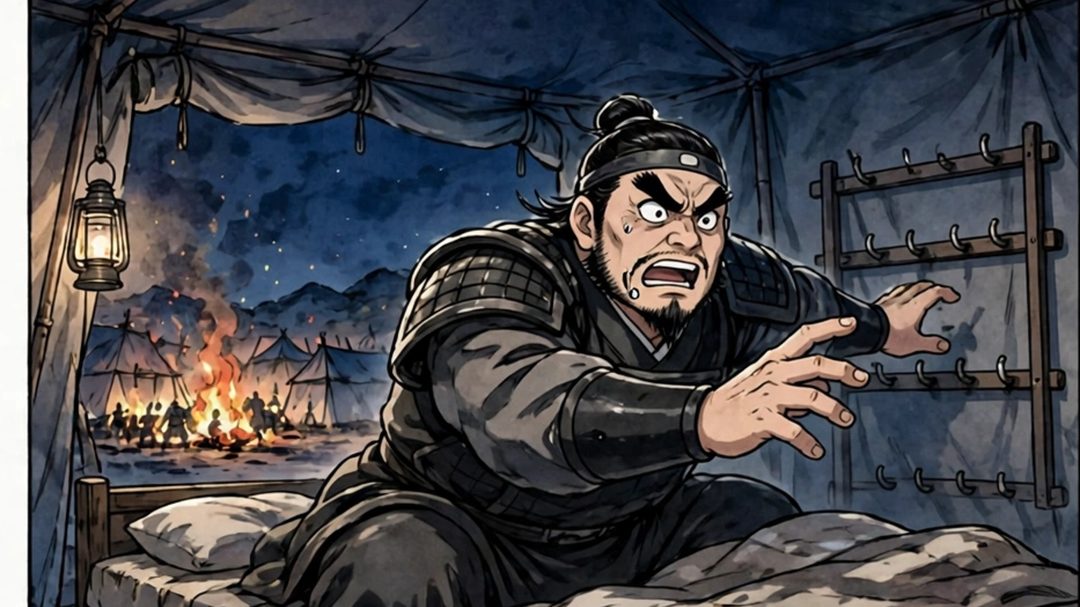
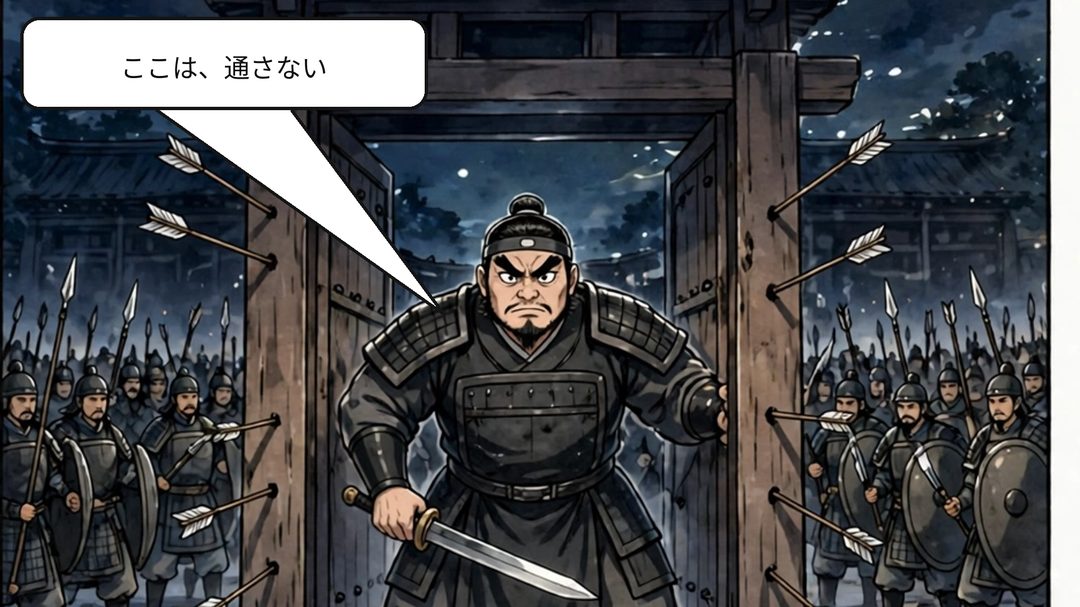
Around the second watch, fires rose here and there in the camp, and battle cries broke out. It was Zhang Xiu's night attack. Dian Wei sprang up at the sound of drums and cries. But where his hand reached out, the twin halberds were not there. The enemy soldiers were already pressing close to the camp's gate. Dian Wei snatched up an infantryman's waist sword and stood before the gate.
Against the surging cavalry, he is said to have cut down more than twenty men. Dian Wei's body had no armor. Spears lined up thickly from both sides, and his body took several dozen spears. Even so, Dian Wei did not retreat. When the sword chipped and became unusable, Dian Wei grabbed an enemy soldier in each hand, one per hand, and fought swinging them.
By those hands, eight or nine men are said to have fallen. The enemy could not approach Dian Wei, and could only shoot arrows from afar like rain. Even so, Dian Wei kept blocking the gate. This time itself was Cao Cao's path of escape. Cao Cao, while Dian Wei held the gate back, escaped on horseback from behind the camp.
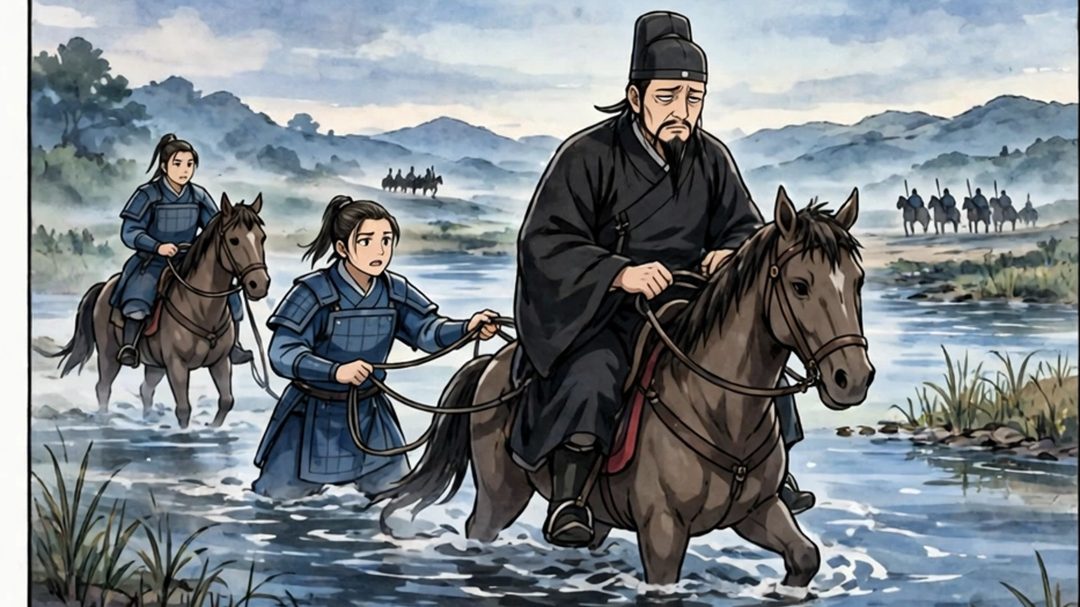
Caught up with at the bank of the Yu River, his eldest son Cao Ang gave his own horse to his father, and himself fell to the arrows. His nephew Cao Anmin also lost his life this night. Before the gate, Dian Wei's fight was about to end. Dian Wei, taking a spear in the back, cried out loudly several times and at last fell.
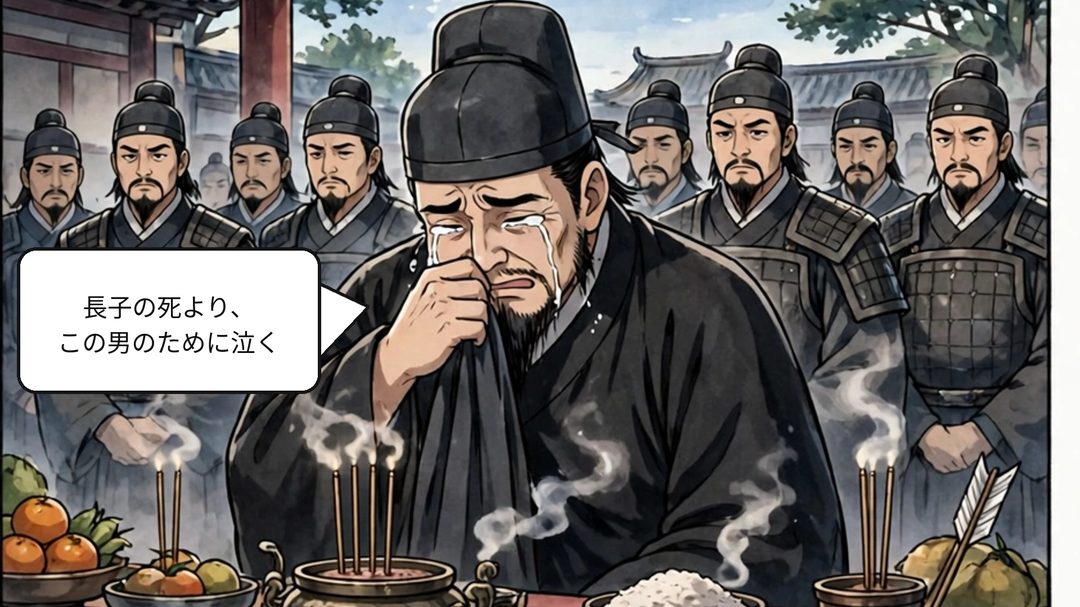
Even for a while after Dian Wei fell, not a single enemy tried to enter through that gate, the text relates. After the battle, Cao Cao held a memorial for Dian Wei, and himself wept and offered a libation. And toward his generals, he said this: I lost my eldest son and my beloved nephew, but I did not grieve so deeply.
For Dian Wei alone, I wail, he said. There are not many bodyguards mourned this much by their lord. Dian Wei's end remained deep in Cao Cao's breast.
Differences from the Official History
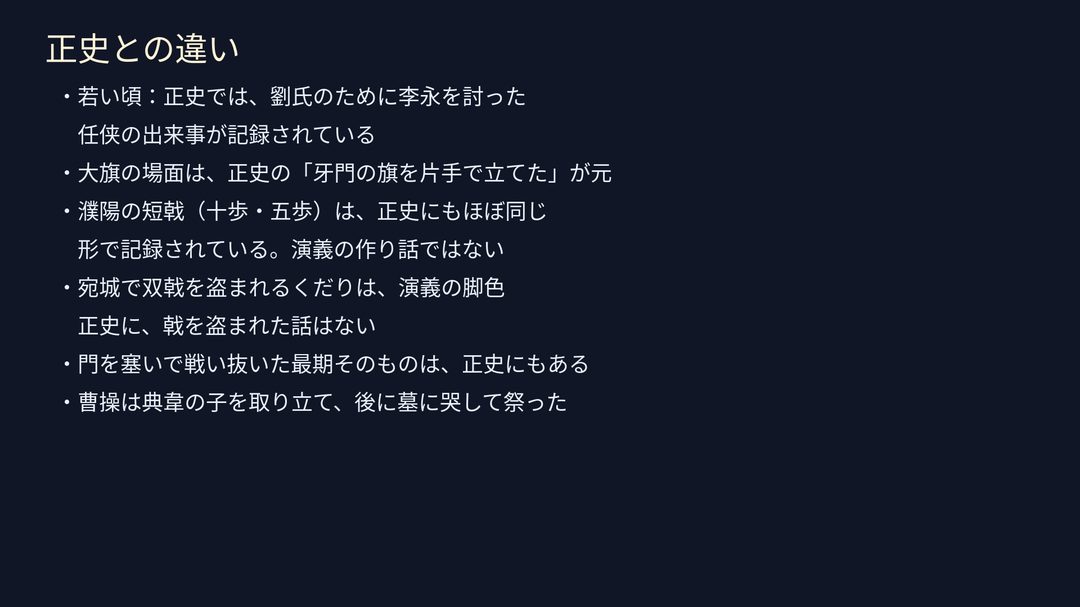
Here, let us make clear the difference between the Biography of Dian Wei in the official history, the Records of the Three Kingdoms, and the Romance. First, his youth. In the Romance, Dian Wei is said to have fled into the mountains after not getting along with the men under Zhang Miao's tent, and to have been picked up by Xiahou Dun. In the official history, before that, a chivalrous incident is recorded: for the Liu family of Xiangyi, he struck down Li Yong of Suiyang.
It is the official history's story that he had the gate opened, stabbed Li Yong, and did not let several hundred pursuers come near. The scene of supporting the great banner with one hand also has a source. In the official history, Dian Wei, who served as a major in Zhang Miao's army, is said to have been able to hold up the great gate banner with a single hand. The scene of the short halberds at Puyang is not an invention of the Romance.
His way of fighting — drawing them in to ten paces, to five paces, and hurling a dozen or so halberds — is recorded in the official history in nearly the same form. On the other hand, the episode in which Hu Che'er steals the twin halberds on the night of Wancheng is an embellishment created by the Romance. There is no story in the official history of the halberds being stolen. However, Dian Wei's end itself is in the official history too.
The official history relates that all his personal guards fell, and Dian Wei, covered in wounds, fought to the end with an enemy clamped under each arm. That Cao Cao mourned Dian Wei is also recorded in the official history. Cao Cao took Dian Wei's son into service as a court gentleman, and later, it is related, wept at Dian Wei's tomb and offered a memorial. It can be said that the Romance, on top of the core of the official history, added the trap of wine and stolen halberds, and made Dian Wei's end stand out as a story.
Conclusion
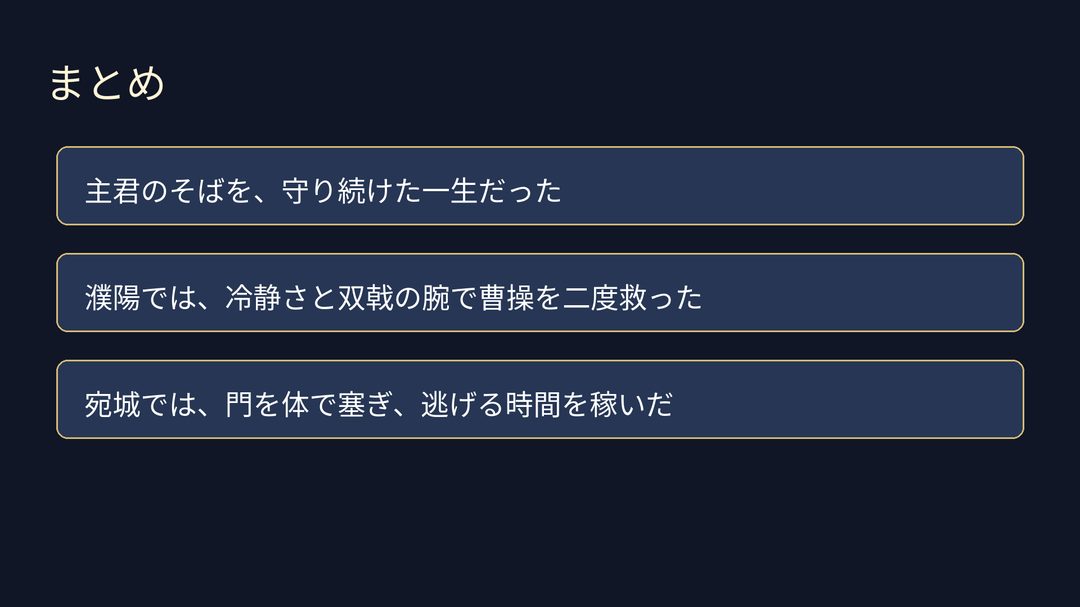
Dian Wei's life was a life of finding the one to serve, and continuing to guard beside that person. At Puyang, with the composure to draw the enemy in to ten paces, to five paces, and with his skill with the twin halberds, he rescued Cao Cao twice. At Wancheng, on a night when his weapons had been taken and his body was not at its best, he blocked a single gate with his body, and bought the time for Cao Cao to escape.
The man who supported a banner with one hand in the end supported a gate with his own body. Dian Wei was a man who remained Cao Cao's shield.
Sources and Basis
Source material
Based on Romance of the Three Kingdoms, Chapter 10 (up to his entering service), Chapters 11 to 12 (Puyang), the scenes at Wancheng, and the Biography of Dian Wei in the official history Records of the Three Kingdoms. The animal chased is given as a deer, not a tiger, in accordance with the original text, and both the twin iron halberds of eighty jin and Cao Cao's words "This is Elai of old" are as in the original text.
Distinguishing the Romance from the official history
Dian Wei's character and his death at Wancheng are recorded in the official history as well. The depiction of the details of the fighting includes the Romance's way of portraying them in places.